
Ready to plan a clearer Florida delivery?
Use exact visible details so compatible travelers can assess the request before messaging you.
The description is the foundation of informed consent between sender and traveler. It should let a person who has never seen the item recognize it, estimate the space it will occupy and know what to inspect before accepting custody.
A useful description answers “what exactly will I receive?”
Name the item in ordinary language, then add the brand, model, quantity, color, approximate age and current condition when relevant. List every accessory that will travel with it. Describe the packaging separately from the item. Disclose batteries, glass, sharp edges, strong odors, leaks, prior damage or anything else that changes how a traveler would evaluate it. Avoid marketing phrases that hide physical facts.
Sources: USPS: How to Prepare and Send a Package; FTC: Buying From an Online Marketplace
Build the description from the inside out
This order mirrors the traveler’s pickup inspection.
- State the identity. Write “used Apple iPhone 14, blue, 128 GB” rather than “phone,” or “three hardcover textbooks” rather than “books.”
- State the condition. Note cracks, scratches, missing pieces, moisture exposure, battery swelling or other visible issues. “Used” alone is not enough.
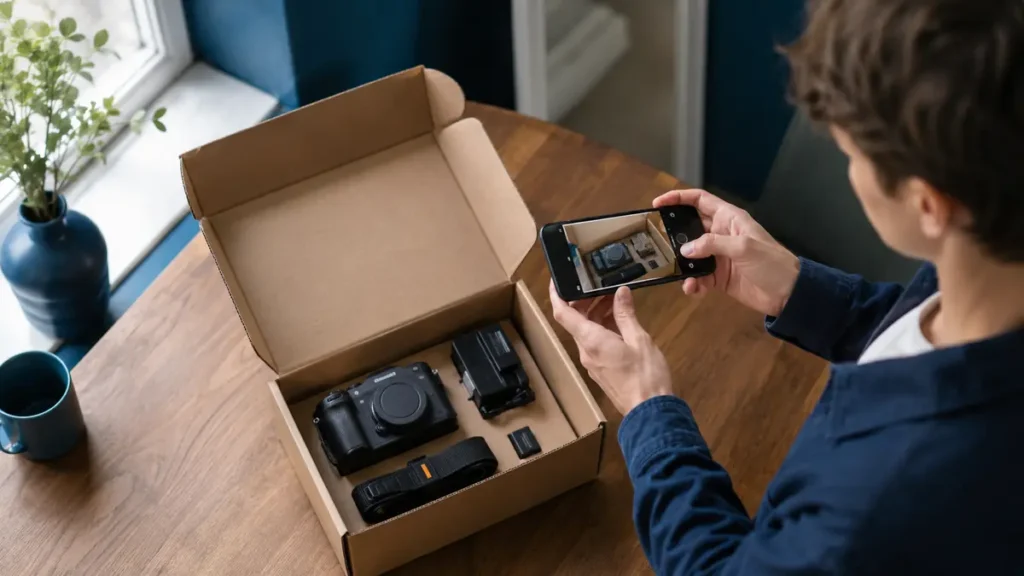
- List every component. Include cases, chargers, cables, lenses, remotes, manuals or separate parts and show them together in a photograph.
- Describe the prepared package. Give approximate outer dimensions, weight, number of pieces and whether the traveler must keep a specific side upright.
- Explain the inspection. Identify what can be opened or powered on and who will be present to demonstrate the condition at pickup.
Sources: USPS: How to Prepare and Send a Package
Words that signal the description is incomplete
Rewrite a listing when it relies on vague labels instead of observable facts.
- “Miscellaneous,” “personal effects,” “surprise,” “sealed,” or “do not open” without an exact visible inventory.
- A store photo when the actual used item and its present condition are not shown.
- A single quantity that hides multiple loose packages or accessories.
- A declared value that cannot be reconciled with the stated model and condition.
Sources: USPS: How to Prepare and Send a Package; FTC: Buying From an Online Marketplace
Clarity protects both sides without guaranteeing condition
A precise listing does not transform the traveler into an appraiser or repair technician. It creates a reasonable physical comparison: the item at pickup should be the item represented online. When authenticity, function or hidden damage requires professional expertise, obtain that evaluation separately and use the appropriate specialist service.
What to keep in the delivery record
Preserve the description and the visual evidence as one record rather than unrelated messages.
- Final listing text.
- Current timestamped photographs from several angles.
- Accessory and quantity inventory.
- Pickup inspection notes and any accepted variance.
Frequently asked questions
Can I use a manufacturer photo?
It may explain the model, but it should not replace current photographs of the actual item and condition.
Should I include serial numbers publicly?
Avoid exposing a complete sensitive identifier publicly. Record it securely when needed for comparison and dispute evidence.
What if the item has many small parts?
Create a countable inventory, group the parts visibly and package them so the traveler can confirm the complete set.
Research sources
Turn the checklist into a real PackItPal plan
Choose the Florida route, describe the visible item accurately and review the complete marketplace price before committing.